How Morning Sunlight Supports Energy, Mood, and Better Sleep

Many people wake up feeling groggy, low on motivation, or mentally “slow”, even after getting a full night of sleep. The common assumption is that sleep duration is the problem, but often, the issue begins much earlier in the day—specifically, with a lack of morning sunlight exposure. Modern routines often involve waking up indoors, immediately … Read more

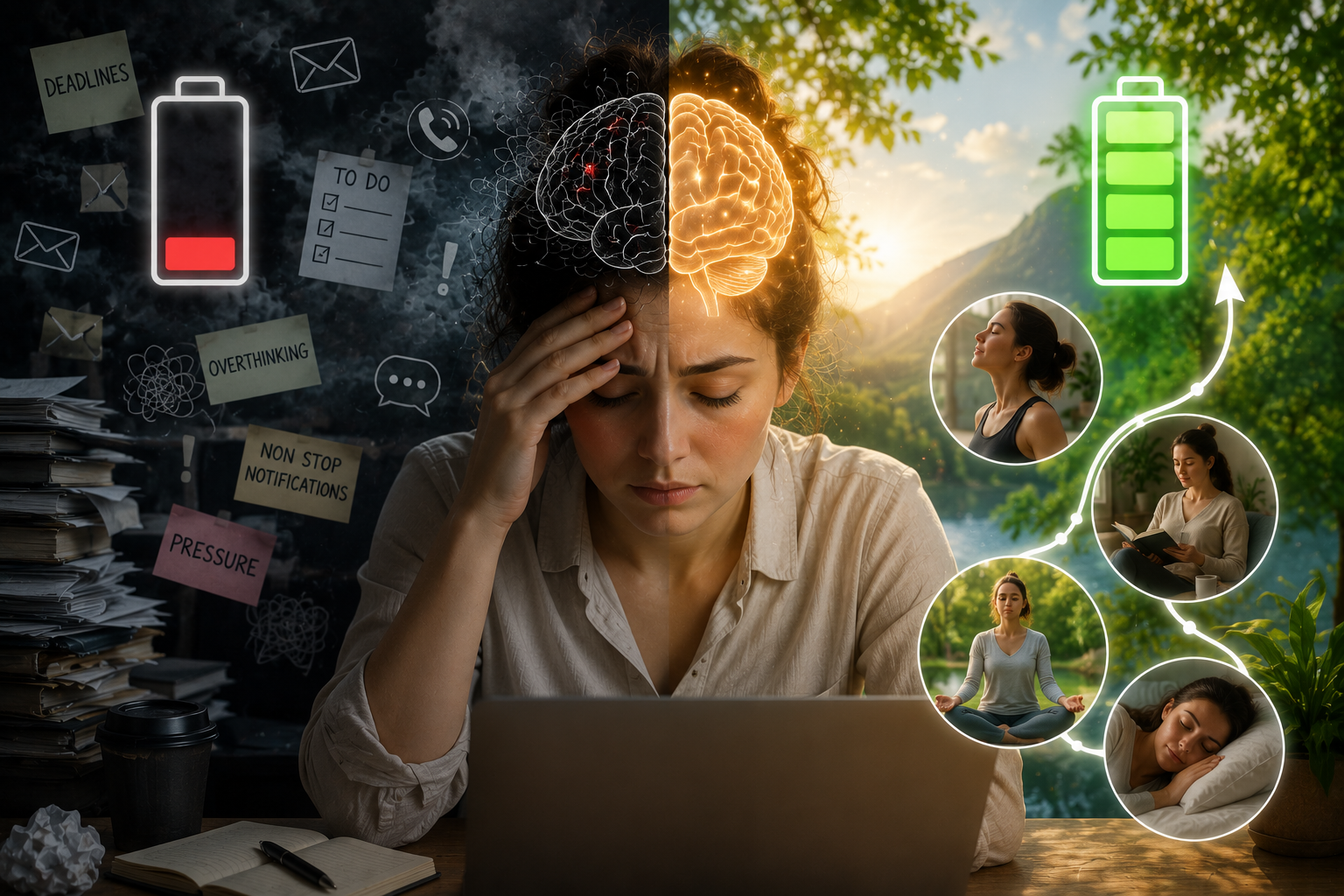
How Mental Fatigue Builds Up and What Helps You Reset Faster

There are times when even the simplest task feels difficult to complete. You sit down to work, study, or focus on something important, but within a few minutes, your attention starts drifting. You check your phone, think about something unrelated, or simply lose interest altogether. If you can’t concentrate even for 10 minutes, it can … Read more

How Simple Plate Planning Helps Improve Daily Nutrition Balance

Eating healthy often sounds more complicated than it needs to be. Many people believe they need strict meal plans, expensive superfoods, or detailed calorie tracking to improve their nutrition. In reality, daily nutrition balance usually comes from simple, repeatable habits—not perfection. One of the easiest and most practical methods is simple plate planning. Instead of … Read more

How Stable Blood Sugar Levels Help Maintain Natural Daily Energy

Many people struggle with low energy during the day and immediately blame poor sleep, stress, or a busy schedule. While those factors certainly matter, one major cause often gets ignored—unstable blood sugar levels. If your energy feels strong in the morning but suddenly drops after lunch, or if you constantly crave sugar, snacks, or coffee … Read more

How Morning Routines Influence Mental Clarity Throughout the Day

In today’s fast-moving digital environment, maintaining concentration has become increasingly difficult. Notifications, background noise, and constant access to information can easily break focus, even during simple tasks. Many people notice that work takes longer than expected—not because of complexity, but because of frequent interruptions. At one point, I noticed that even brief distractions were impacting … Read more