
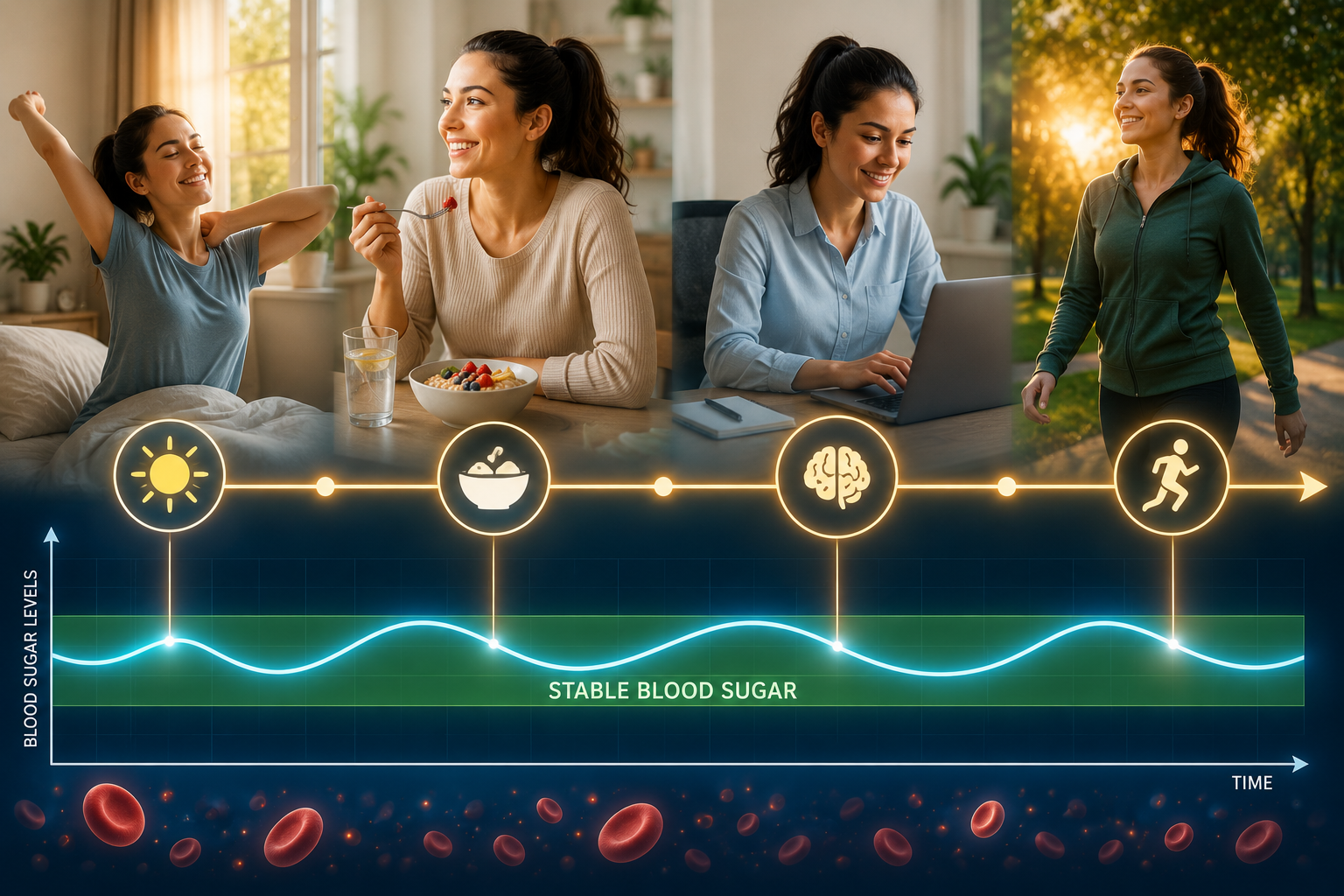
Many people struggle with low energy during the day and immediately blame poor sleep, stress, or a busy schedule. While those factors certainly matter, one major cause often gets ignored—unstable blood sugar levels.
If your energy feels strong in the morning but suddenly drops after lunch, or if you constantly crave sugar, snacks, or coffee just to stay productive, your blood sugar balance may be playing a bigger role than you realize.
Stable blood sugar helps your body produce steady energy, better focus, improved mood, and fewer cravings. It also supports better digestion, stronger productivity, and healthier eating habits without relying on extreme diets.
The good news is that improving blood sugar balance does not require complicated meal plans or strict food rules. Small daily habits can significantly impact your health.
Let’s look at how stable blood sugar helps maintain natural daily energy and what practical steps can support it.
What Blood Sugar Stability Actually Means
Blood sugar refers to the amount of glucose circulating in your bloodstream. Glucose is the main fuel source your body uses for energy, especially for your brain, muscles, and nervous system.
Every time you eat—especially foods rich in carbohydrates—your blood sugar rises. Your body then releases insulin, which helps move that glucose into your cells where it can be used for energy.
The problem starts when blood sugar rises too quickly and then drops too fast.
For example, eating sugary snacks, white bread, pastries, or heavily processed foods can create a rapid spike in blood sugar. This often leads to a quick crash afterward.
That crash may feel like:
- sudden tiredness
- brain fog
- irritability
- sugar cravings
- poor concentration
- afternoon fatigue
- low motivation
Balanced meals help slow this process and keep your energy more stable.
If you often feel tired after eating, you may also relate to Why You Feel Low Energy After Eating.
Common Signs of Unstable Blood Sugar
Many people experience unstable blood sugar without realizing it. The symptoms often look like normal “busy life” problems.
1. Feeling Hungry Soon After Meals
If you eat breakfast or lunch and feel hungry again within one or two hours, your meal may not have enough protein, fiber, or healthy fats to keep you satisfied.
Meals built mostly around refined carbs digest quickly and often leave you feeling hungry again.
2. Strong Cravings for Sugar or Coffee
Frequent cravings for sweets, soft drinks, or multiple cups of coffee can be a sign that your energy is crashing repeatedly.
Your body looks for quick fuel when blood sugar drops too fast.
3. Afternoon Energy Slumps
The classic 2 PM crash often happens because lunch caused a fast blood sugar spike followed by a drop.
This is one reason many people feel sleepy or mentally slow in the afternoon.
You may also benefit from How I Prevent Afternoon Slumps With Quick Micro Workouts.
4. Difficulty Concentrating
Your brain depends heavily on glucose for mental performance. When blood sugar swings too much, focus becomes harder.
This often shows up as brain fog, forgetfulness, or difficulty staying on task.
This connects closely with How Short Breaks Improve Long-Term Focus During Work Sessions.
Why Skipping Meals Often Makes Things Worse
Many people skip breakfast or delay meals because they are busy or trying to eat “less.” Unfortunately, this often causes more problems than it solves.
Long gaps between meals can lead to:
- stronger cravings later
- overeating at night
- poor focus during work
- mood swings
- low productivity
- reduced patience
When your body goes too long without balanced fuel, it often pushes you toward quick fixes like sugar, caffeine, or large heavy meals.
A better approach is consistent, balanced meals rather than long periods without food.
This works especially well with habits from Best Evening Habits That Prepare Your Body for Better Sleep because poor sleep can also worsen blood sugar control.
The Role of Protein in Energy Stability
Protein is one of the strongest tools for maintaining stable blood sugar.
It slows digestion, helps prevent quick spikes, and keeps you feeling full for longer.
Instead of eating only toast, cereal, or sugary snacks, adding protein can create much steadier energy.
Good protein options include:
- eggs
- Greek yogurt
- chicken
- lentils
- beans
- cottage cheese
- fish
- nuts and seeds
- tofu
Even small changes help.
For example:
Instead of only fruit → fruit + yogurt
Instead of plain toast → toast + eggs
Instead of coffee only → coffee + protein-based breakfast
This supports the same idea discussed in How Protein Balance Supports Energy and Appetite Control.
Why Fiber Matters Just as Much
Fiber works together with protein to improve blood sugar balance.
It slows how quickly sugar enters the bloodstream, helping you avoid sharp spikes and crashes.
Fiber-rich foods include:
- vegetables
- fruits
- oats
- brown rice
- beans
- lentils
- chia seeds
- flaxseeds
- whole grains
Fiber also improves digestion and helps reduce unnecessary hunger between meals.
Many people notice fewer cravings simply by improving fiber intake.
You may also like How Fiber Intake Helps Control Hunger Naturally.
Smart Carbohydrates vs Fast Carbohydrates
Carbohydrates are not the enemy. The real issue is the type and balance of carbs.
Fast-digesting carbs often cause quick spikes:
- sugary drinks
- white bread
- pastries
- candy
- highly processed snacks
- sweet breakfast cereals
These provide quick energy but often lead to faster crashes.
Smarter carbohydrate choices include:
- oats
- sweet potatoes
- quinoa
- whole grain bread
- brown rice
- fruit paired with protein
- rice with vegetables and protein
The goal is not removing carbs—it is choosing better ones and pairing them wisely.
This fits naturally with How Simple Plate Planning Helps Improve Daily Nutrition Balance.
Hydration Also Affects Energy
Low hydration can feel surprisingly similar to unstable blood sugar.
Symptoms include:
- tiredness
- headaches
- poor focus
- irritability
- false hunger signals
Sometimes people think they need sugar when they actually need water.
This is especially common during long workdays when people forget to drink regularly.
Simple hydration habits can protect both focus and energy.
Related reading: My Method for Staying Hydrated During Long Workdays
Movement Helps Your Body Use Energy Better
Light movement after meals helps your body manage blood sugar more effectively.
This does not require intense exercise.
Simple examples include:
- a 10-minute walk
- stretching
- standing breaks
- light cleaning
- mobility work
- short walks during calls
Even small movements improve digestion and help glucose enter your muscles more efficiently.
This approach supports both energy and long-term health.
You may find useful ideas in How I Balance Work and Movement in a Sedentary Job.
Stress and Sleep Also Affect Blood Sugar
Many people focus only on food, but stress and poor sleep also strongly affect blood sugar regulation.
When stress stays high, cortisol levels rise. This can increase cravings, emotional eating, and unstable energy.
Poor sleep can also make your body less responsive to insulin and increase next-day hunger.
That is why energy management should include the following:
- better sleep routines
- recovery habits
- reduced screen overload
- realistic stress management
This is why articles like How Light Exposure Impacts Your Natural Sleep-Wake Cycle matter so much for overall energy.
Building a More Stable Daily Routine
You do not need perfect eating habits to improve energy. Small consistency matters more than extreme discipline.
Helpful habits include:
- eating balanced meals regularly
- combining carbs with protein
- increasing fiber intake
- drinking enough water
- moving after meals
- reducing high-sugar snacks
- sleeping consistently
- managing stress better
Even simple grocery planning makes healthy choices easier.
See also How to Build a Weekly Grocery System for Healthier Eating.
Final Thoughts
Stable blood sugar is one of the most overlooked parts of maintaining natural daily energy.
Many people try to fix fatigue with more caffeine, more snacks, or quick sugar boosts. But those solutions often create the same problem again.
Real energy comes from balance.
When your meals are steady, your hydration improves, your movement increases, and your sleep becomes more consistent, your body produces stronger and more reliable energy naturally.
Instead of chasing quick fixes, focus on habits that support long-term stability.
Better energy is often not about doing more—it is about helping your body work better.
Frequently Asked Questions
1. What foods help keep blood sugar stable?
Foods rich in protein, fiber, and healthy fats help most. Examples include eggs, yogurt, beans, vegetables, oats, nuts, fish, and whole grains. Balanced meals work better than sugary snacks or refined carbs alone.
2. Can unstable blood sugar cause tiredness even if I sleep well?
Yes. Even with good sleep, blood sugar crashes can cause fatigue, brain fog, cravings, and poor concentration during the day.
3. Is skipping breakfast bad for blood sugar balance?
For many people, yes. Skipping breakfast can lead to stronger cravings, overeating later, and unstable energy levels—especially if lunch is heavy or high in refined carbs.
4. Does walking after meals really help?
Yes. Light walking after meals helps your body use glucose more efficiently and can reduce the sharp rise in blood sugar after eating.
5. Do I need to avoid all carbohydrates for stable energy?
No. The goal is not removing carbs completely. It is choosing better carbohydrates like oats, fruit, brown rice, and whole grains while pairing them with protein and fiber for better balance.
